Health and Safety Policy for Moving Day
 This moving day health and safety policy sets out clear expectations to help reduce risk, protect people, and keep the relocation process organized. Moving can involve lifting, carrying, loading, unloading, cleaning, and working in shared spaces, so a careful approach is essential. The purpose of this policy is to promote safe behaviors, support good planning, and reduce avoidable incidents throughout the day.
Everyone involved in the moving day safety policy must understand that safety comes before speed. Tasks should be planned in advance, hazards should be identified early, and equipment should be used correctly. Special attention should be given to walkways, stairs, slippery surfaces, poor lighting, and items that may be awkward to handle. Clear communication helps keep the process controlled and reduces confusion.
Health and safety during moving day depends on preparation, awareness, and cooperation. People should not rush, overestimate their strength, or attempt unsafe lifts. Where possible, heavy or bulky items should be moved with assistance or mechanical aids. This policy applies to all people taking part in the relocation, including those packing, lifting, transporting, and receiving items.
Planning and Risk Control
Before moving begins, a basic assessment should be completed to identify likely hazards. These may include unstable furniture, trailing cables, loose flooring, weather conditions, or restricted access points. A safe moving day policy should consider both the property being vacated and the destination, since each location may present different risks.
Safe planning also includes confirming which items require extra care. Fragile, sharp, heavy, or valuable objects should be separated and clearly marked. Boxes should not be overfilled, and loads should be balanced to avoid strain or spills. If items are too heavy or too awkward, they should be split into smaller loads or handled with help.
 It is important to keep pathways clear throughout the day. Boxes, wrapping materials, tape, tools, and small objects should not be left in hallways, near doors, or on stairs. Good housekeeping supports a safer environment and helps prevent trips, slips, and collisions. Where possible, one area should be used for packing and staging items to keep movement controlled.
Safe Lifting and Handling
Manual handling is one of the main risks on moving day. Everyone should use correct lifting technique: stand close to the load, bend the knees, keep the back neutral, and avoid twisting while carrying. When a load is difficult to grip or see around, a second person should help. Never lift beyond personal capability.
Footwear should be sturdy, closed-toe, and suitable for moving across different surfaces. Loose clothing and items that could snag should be avoided. Gloves may help with grip, especially when handling rough boxes, furniture edges, or outdoor items. However, gloves must still allow control and should not replace careful handling.
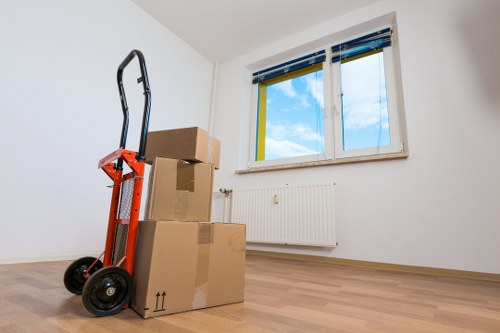
If mechanical aids such as trolleys, dollies, or straps are available, they should be used correctly and only for their intended purpose. Equipment should be checked before use to make sure it is stable and in good condition. Any damaged aid should be removed from use until it has been repaired or replaced.
Housekeeping, Loading, and Transport
 Loading vehicles should be done in a planned and steady way. Heavier items should be placed at the bottom and secured so they do not shift during transit. Fragile goods should be protected from crushing, impact, and vibration. Overloading should be avoided because it increases the chance of damage and creates handling risks.
When moving items in and out of vehicles, care should be taken around ramps, tail lifts, and changing ground levels. Only one person should give instructions at a time to prevent mixed messages. Visibility is important, so if a load blocks the view ahead, another person should guide the route. Sudden movements, running, and unsafe stacking should never be allowed.
Weather can affect moving day safety, especially in rain, wind, ice, or extreme heat. Wet surfaces may become slippery, and strong winds can make carrying awkward items more difficult. In hot conditions, regular breaks and hydration are important. In cold conditions, extra care should be taken when handling metal surfaces or working outdoors for long periods.
Emergency Preparedness and Reporting
All participants should know what to do if an accident, injury, or near miss occurs. First aid supplies should be available, and any serious incident should be escalated immediately. If a person becomes unwell, tasks should stop so the situation can be assessed properly. A calm response is more effective than trying to continue through a problem.
Incidents, hazards, and damaged equipment should be reported as soon as possible so corrective action can be taken. Reporting helps prevent repeat problems and strengthens future moving safety procedures. Even small issues, such as a torn box, unstable shelf, or wet patch, should be addressed quickly because they can lead to more serious harm if ignored.
 Where children, visitors, or pets are present, additional control measures should be used. They should be kept away from lifting areas, open doors, vehicle access routes, and packing materials. A clear boundary helps reduce distractions and supports safer working conditions. Good supervision is essential when people unfamiliar with the process are nearby.
Responsibilities and Safe Conduct
 Everyone involved in the relocation has a responsibility to act safely, follow instructions, and respect the limits of the space and equipment. The aim of this health and safety policy for moving day is not to slow the process but to make it orderly, efficient, and secure. Good preparation, teamwork, and awareness are the best ways to reduce risk.
Safe conduct includes taking breaks when needed, asking for help early, and stopping work when conditions become unsafe. No one should feel pressured to continue lifting or carrying if they are tired, unwell, or unsure about a task. A strong safety culture values caution, clear communication, and steady progress over rushing. By following this moving day safety policy, people can complete the move with fewer injuries, less damage, and greater peace of mind.